
Working for yourself comes with real freedom and a long list of decisions an employer used to quietly handle for you. Health insurance usually sits at the top of that list. If you’re a freelancer, an independent contractor, or you run your own small business in Ohio, you’ve probably wondered how self-employed and health insurance actually fit together, and whether your options hold up the way a traditional job’s coverage would.
They can. You just need to know where to look and what to ask before you sign anything. At MJ Knapp Insurance Agency, we’ve helped Ohio families sort through coverage decisions since 1934, and the self-employed households we work with tend to share one concern: they want a plan that still works when income, schedule, or health needs shift mid-year.
Can Self-Employed Ohioans Get Health Insurance?
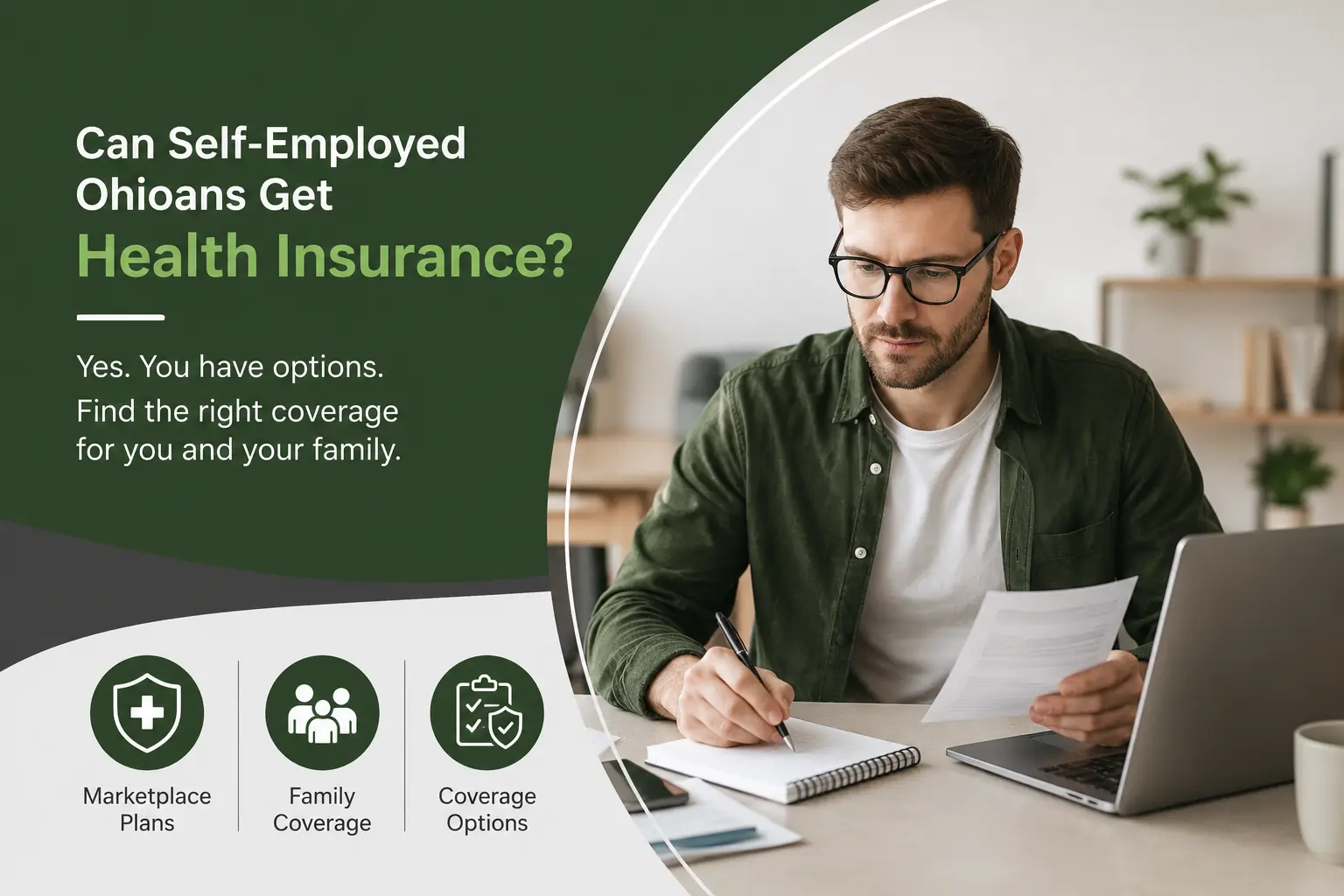
Yes. Self-employed Ohio residents can buy individual or family health insurance in Ohio, most often through the federal Health Insurance Marketplace at HealthCare.gov. Depending on income and household size, you may also qualify for income-based Marketplace savings, Medicaid, COBRA after leaving a job, or coverage through a spouse’s employer plan. The right choice depends less on the plan’s label and more on your doctors, prescriptions, and how steady your income is.
What Are Your Main Health Coverage Options as a Self-Employed Ohioan?
A graphic designer in Dublin, a contractor in Delaware County, and a consultant in Columbus may each land on a different path. Here’s how the main options for health plans for self-employed Ohioans break down.
Ohio Marketplace health insurance. This is where most people start. You apply through HealthCare.gov, enter household details and an estimated yearly income, and compare individual or family plans side by side.
A spouse’s employer plan. If your spouse has job-based coverage, joining it can be the simplest route, especially if the network already includes your doctors. Still, compare the deductible, copays, and prescription formulary before assuming it’s automatically the easier choice.
COBRA after leaving a job. If you recently left a position with group coverage, COBRA may let you keep that same plan for a limited time while you launch a business or compare other options.
Medicaid, if you qualify. Self-employment income can swing widely month to month. Don’t assume you’re ineligible just because you own a business; eligibility depends on your full household picture.
Direct individual or family plans. You can also buy individual health insurance in Ohio outside the Marketplace. This is sometimes called self-paid medical insurance, since you’re purchasing it directly rather than through payroll. (Worth noting: a self-funded health plan is a different structure built for employers with staff, not what most solo entrepreneurs set up for personal coverage.)
When Can You Enroll?
Most people enroll during the annual Open Enrollment Period. But a qualifying life event, such as losing job-based coverage, marriage or divorce, having a child, or moving, can open a Special Enrollment Period outside that window. Don’t wait until you need care to start looking; understand your options early and act quickly once a qualifying event happens.
How Does Self-Employment Income Affect Your Coverage?
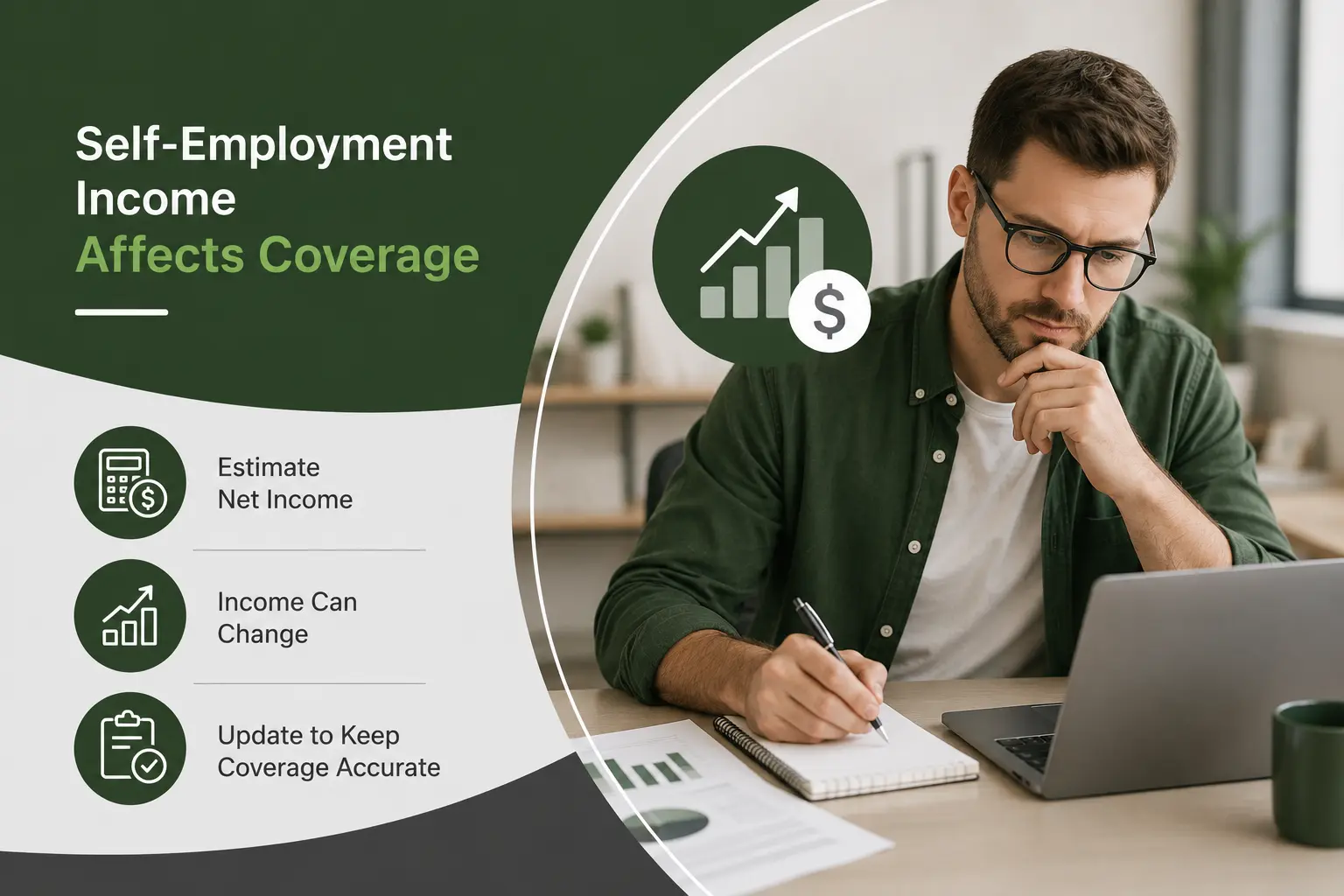
This is where self-employed and health insurance get genuinely different from a salaried job. Marketplace savings are based on your estimated net income for the coverage year, business income minus eligible expenses, not last year’s tax return.
Picture a Dublin-based marketing consultant who expects a steady year, then lands two large retainer clients that spring. Their projected income just changed, and updating the Marketplace application promptly keeps financial assistance accurate instead of creating a surprise reconciliation later. For a sense of how coverage expenses can vary by household size and income, see what individual health insurance may cost.
Bronze, Silver, Gold, or Catastrophic: Which Fits a Self-Employed Person?
The category matters less than how you actually use care. Ask yourself:
- Do I see doctors regularly, or mostly for preventive visits?
- Are my preferred providers in-network?
- Do I take ongoing prescriptions?
- Could I handle a higher deductible if something unexpected happened?
The best medical insurance for self-employed people isn’t the plan with the lowest sticker price; it’s the one that matches how you use care. We walk through this in more detail in how to choose a health insurance plan.
Can You Deduct Health Insurance Premiums?
Many self-employed people can claim a self-employed health insurance tax deduction for qualifying medical, dental, and vision premiums for themselves, a spouse, and dependents. The rules involve business profit and eligibility for other employer coverage, so confirm specifics with a tax professional rather than assuming it applies automatically.
What Mistakes Should Self-Employed Ohioans Avoid?
- Skipping the network check. Confirm your doctors and specialists actually participate before enrolling.
- Ignoring the prescription formulary. A drug can be “covered” and still sit in an expensive tier.
- Reporting income once and forgetting it. Update your application when business income shifts.
- Judging a plan by one number. Deductible, copays, coinsurance, and network access all matter together.
- Mixing up personal and business coverage. Your health plan protects you and your family; it has nothing to do with liability or property coverage for your business.
Why Talk to an Independent Agent First?
A self-employed person doesn’t have an HR department walking them through open enrollment, which is exactly where an independent agent earns their keep. We ask the questions that actually shape a good decision: which doctors matter most, how your income tends to move, and what would make a plan frustrating six months from now. Because we’re independent, our job is to help you compare health insurance options in Ohio, not steer you toward one carrier.
Frequently Asked Questions
Q.1 How do self-employed people get health insurance in the USA?
Most buy individual or family coverage through the Health Insurance Marketplace, join a spouse’s employer plan, use COBRA after leaving a job, or qualify for Medicaid based on household income. The right option depends on your situation and enrollment timing.
Q.2 How do I get health insurance in Ohio if I’m a freelancer or independent contractor?
You can generally apply for individual or family coverage through HealthCare.gov, providing household details and an estimated annual net self-employment income.
Q.3 Can I still get coverage if I have a pre-existing condition, like diabetes?
Yes. Marketplace plans can’t deny coverage or charge more for pre-existing conditions. Focus instead on confirming your doctors and medications are included in the plan’s network and formulary.
Q.4 What is the “$400 rule” for self-employed people?
It commonly refers to self-employment tax filing thresholds, not a health insurance eligibility rule. Insurance eligibility depends on household size, income, and available programs. A tax professional can clarify how the filing rule applies to you.
Q.5 Can I change my Marketplace plan if my self-employment income changes?
You should update your Marketplace application whenever your estimated income changes. Whether you can switch plans depends on your specific enrollment circumstances.
Q.6 Should I choose a Marketplace plan or a private individual plan?
It depends on your eligibility for savings, your preferred provider network, and your household’s needs. Comparing both paths side by side is the safest way to decide.
Take the Next Step
You don’t have to sort through every option alone. Start with a simple list of your household’s doctors, prescriptions, expected care, and a realistic income estimate, then compare which coverage path actually fits.
For a clearer, no-pressure conversation about your situation, speak with an Ohio insurance agent. MJ Knapp Insurance Agency has worked with Ohio families since 1934, and we’re glad to help you turn “I need coverage” into an actual decision.
When you’re ready, our local insurance specialists understand that this decision touches both your business and your family, and we’re here whenever you are.
