
A sudden car accident, a fall at home, or a tragedy at work can change everything for a family in a single afternoon. When that happens, one of the first questions people ask their insurance agent is simple: will life insurance actually pay out if the death was accidental?
The short answer is yes, in most cases. Standard life insurance policies are built to pay a death benefit no matter how the insured passes away, as long as the policy is active and no exclusion applies. But there’s more nuance to it than a plain yes or no, especially once riders, exclusions, and separate accident-only coverage enter the picture.
If you already have a policy through Whole Life Insurance Solutions, it likely covers accidental death already. But if you’re still building out your protection or comparing options, it helps to understand exactly where standard coverage ends and where extra accident-specific coverage begins.
Does Life Insurance Cover Accidental Death in Ohio?
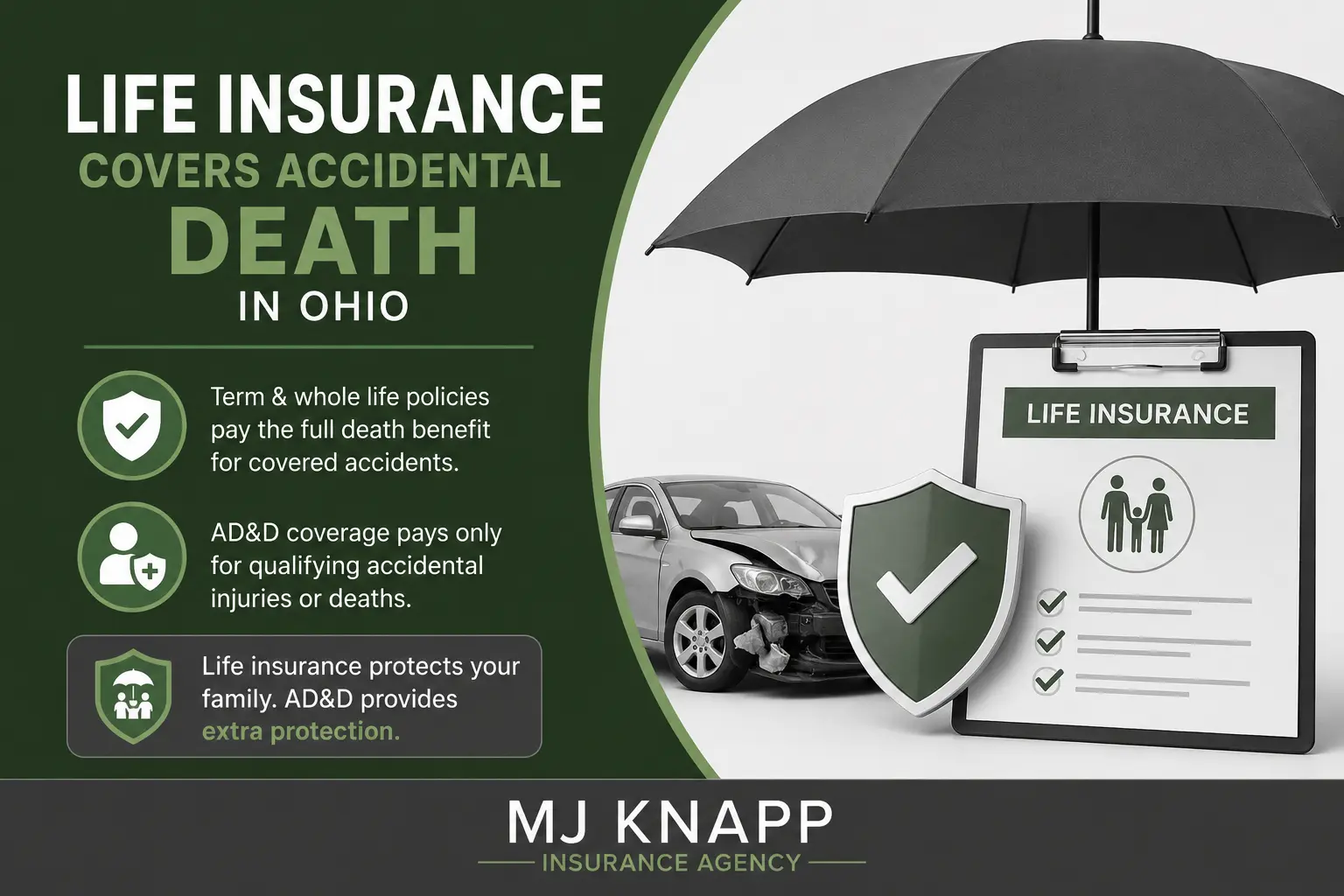
Yes. Term life and whole life policies generally pay the full death benefit when the insured dies in a covered accident while the policy is in force. This includes deaths from car crashes, falls, drownings, workplace incidents, and other sudden events.
Where things get confusing is with Accidental Death & Dismemberment (AD&D) coverage. AD&D only pays out for qualifying accidental injuries or deaths, and it does not cover deaths from illness or natural causes. Because of that narrow focus, AD&D is best thought of as a supplement to your life insurance, not a substitute for it.
What Qualifies as Accidental Death for Life Insurance?
Insurers typically define an accidental death as one caused by a sudden, unexpected, external event, rather than illness or a natural medical condition. Common examples include:
- A fatal car or motorcycle collision
- A fall from a ladder or elevated surface
- A boating or drowning accident
- A workplace incident involving machinery
- An accidental house fire
- Being struck by another vehicle
The defining factor is that the death was unintentional and directly tied to an accident, not to a pre-existing health condition. When a claim is filed, insurers usually review the death certificate, any police reports, medical examiner findings, and hospital records before approving payment. Having this documentation ready can help a claim move along faster.
What Does Standard Life Insurance Cover if Death Happens in an Accident?
A common misconception is that families need a separate accidental death policy to receive benefits after a fatal accident. In reality, most traditional life insurance already covers deaths caused by:
- Motor vehicle and motorcycle accidents
- Falls
- Drowning
- Workplace accidents
- Fires
- Accidental poisoning
- Other sudden, unexpected events
As long as the policy is active and no exclusion applies, beneficiaries typically receive the full death benefit, no additional rider required. If you’re still working out how much coverage your family actually needs before adding anything extra, our guide on how much life insurance you really need walks through that calculation step by step.
What Does Accidental Death Not Cover?
Every policy has limits, and it’s worth knowing them before an unexpected event puts your coverage to the test. Situations where a claim may be reduced or denied include:
- Suicide during the contestability period — most policies exclude suicide for the first one to two years of coverage.
- Material misrepresentation — if health or lifestyle details were left out or falsified on the application.
- Fraud — false information on the original application can affect approval.
- Certain criminal activity — some policies exclude deaths that occur during the commission of a crime.
It’s worth repeating that most accidental deaths themselves are not excluded. Insurers are really checking two things: whether the policy stayed valid, and whether any of its conditions were violated.
Will Life Insurance Pay Out for Cirrhosis?
This question comes up often because families sometimes assume any unexpected death gets treated the same way. Cirrhosis is a disease, not an accident, so a death caused by cirrhosis is handled under the policy’s standard terms rather than as an accidental death claim. If the policy was active, premiums were current, and the application didn’t misrepresent a prior diagnosis, the death benefit is typically still payable. The distinction matters mainly for AD&D coverage, which would not apply here since cirrhosis is an illness, not a qualifying accident.
Can a Person With Dementia Get Life Insurance?
Yes, though options and underwriting requirements vary depending on how advanced the diagnosis is and when it was disclosed. Some carriers offer simplified or guaranteed-issue policies for older adults or those with cognitive health changes, though these often come with different terms than a fully underwritten policy. This is exactly the kind of situation where working with an experienced agency makes a real difference, since not every carrier evaluates dementia the same way.
What Is the Most Common Accidental Death?
Nationally, motor vehicle crashes, falls, and unintentional poisoning rank among the leading causes of accidental death. For Ohio families specifically, driving is often the biggest everyday risk. Rural highways, winter ice, heavy rain, and holiday travel all add up to more exposure behind the wheel throughout the year. Many Ohioans also work in manufacturing, construction, agriculture, and transportation, industries that involve machinery, physical labor, or frequent travel, which can raise the odds of an accidental injury.
Still, accidents represent only one slice of overall mortality. Illness remains the leading cause of death in the U.S., which is why comprehensive life insurance, not accident-only coverage, should usually be the foundation of a family’s protection plan.
What About AD&D Insurance, and How Is It Different?
The easiest way to tell the two apart is to ask: would my family receive a benefit if I passed away from an illness? With traditional life insurance, the answer is generally yes. With AD&D, the answer is generally no, unless the death resulted from a qualifying accident.
AD&D typically does not cover deaths from cancer, heart disease, stroke, Alzheimer’s, diabetes, or most other illnesses. It’s built entirely around accidental events, which is why it works best as an added layer for people in higher-risk occupations or with frequent travel, rather than as a family’s main source of protection.
Real-Life Example: When Standard Coverage Steps In
Picture a father of two in Ohio with a whole life insurance policy. Driving home during icy winter conditions, another driver loses control and causes a serious collision, and he doesn’t survive. Because the policy was active and the death met the definition of a covered event, his beneficiaries would typically receive the full death benefit; no separate accident policy was needed.
If he had also added an accidental death rider, the family may have received an additional payout on top of the base benefit, since the death also met the rider’s specific definition. This is a good example of why it pays to know exactly what your current policy already includes before shopping for something new. If you’re weighing permanent coverage against a term policy as part of that review, our breakdown of term versus whole life insurance can help you compare the two side by side.
How Insurance Companies Confirm an Accidental Death Claim
A sudden death doesn’t automatically get classified as accidental. Insurers review the full picture before approving a claim, which can include the death certificate, police or accident reports, medical examiner findings, hospital records, toxicology reports, and witness statements when relevant. This isn’t a sign that something is wrong with the claim; it’s a standard part of the process, especially anytime an accident is involved.
Families can help avoid delays by notifying the insurer promptly, gathering requested documents early, and keeping copies of key records on hand. This is also where having someone in your corner matters. If you’d rather not sort through policy language and claims paperwork alone, you can talk with a local insurance expert who can walk you through what your policy covers and what to expect during a claim.
Making Sense of It All for Your Family
For most Ohio families, the smarter approach is to start with solid, comprehensive life insurance and then decide whether an AD&D rider makes sense based on occupation, commute, and lifestyle. A rider can be a reasonable add-on for someone who drives long distances or works around heavy equipment, but it was never meant to replace the protection a standard policy already provides.
Since 1934, our team has helped Ohio families sort through exactly this kind of decision, matching coverage to real everyday risks instead of guesswork. If you’re not sure what your current policy covers or whether it still fits your life today, a quick professional insurance consultation can clear that up and point you toward the right next step for your family.
Frequently Asked Questions
Q.1 Does a life insurance policy pay out if the death was an accident caused by someone else?
Yes. As long as the policy was active and no exclusion applies, the cause of the accident, including whether another driver was at fault, typically doesn’t change whether the death benefit is paid.
Q.2 Do I need a separate policy for accidental death, or does my current one already cover it?
Most standard term and whole life policies already cover accidental death. A separate AD&D policy or rider is optional and works as added protection rather than a replacement.
Q.3 How long does an accidental death claim usually take to process?
Timelines vary by insurer and the complexity of the case, but claims with complete documentation (death certificate, police report, medical records) generally move faster than those missing key paperwork.
Q.4 Can beneficiaries be denied a payout if the accident happened while the insured was doing something risky, like extreme sports?
It depends on the policy. Some policies exclude specific high-risk activities unless they were disclosed at the time of application, so it’s worth reviewing your policy’s exclusions if you regularly take part in higher-risk hobbies.
Q.5 Is an accidental death rider worth adding to an existing policy?
It depends on your occupation, commute, and daily risk exposure. For people who drive frequently, work with machinery, or travel often for work, a rider can add a meaningful extra layer of protection.
Q.6 Does life insurance still pay out if the accident happened outside of Ohio or while traveling?
Generally yes. Standard life insurance coverage isn’t limited by geography, so an accident that happens while traveling out of state or abroad is typically still covered under the same policy terms.
